R.A.F. SE.5a Hisso by Chema Martinez A VETERAN OF THE GREAT WAR IN SPAIN At the end of the Great War, surplus aircraft were handed over to Aircraft Disposal, from which the Spanish Military Aeronautics is believed to have purchased one example — although some sources suggest that two may have entered service — around 1919, when a wave of second-hand aircraft arrived in Spain. There is little documented information about this particular airplane and its operational service, but it officially entered service with the Spanish Army Air Corps in 1919. On its fuselage sides, the aircraft sported a witch riding a broomstick — it is not clear whether this was a personal emblem or the marking of a specific unit. What is known is that a nearly identical witch motif also appeared on a Breguet XIV. The model includes a figure of a Spanish pilot wearing a 1919 flight suit, based on an illustration by artist Delfín Salas. R.A.F. SE.5a Hisso by Chema Martinez R.A.F. SE.5a Hisso by Chema Martinez R.A.F. SE.5a Hisso by Chema Martinez R.A.F. SE.5a Hisso by Chema Martinez “Some aircraft may grow old, but their stories still carry the wind of the skies they once conquered.” — Chema M.
DH9A NAPIER 1/32
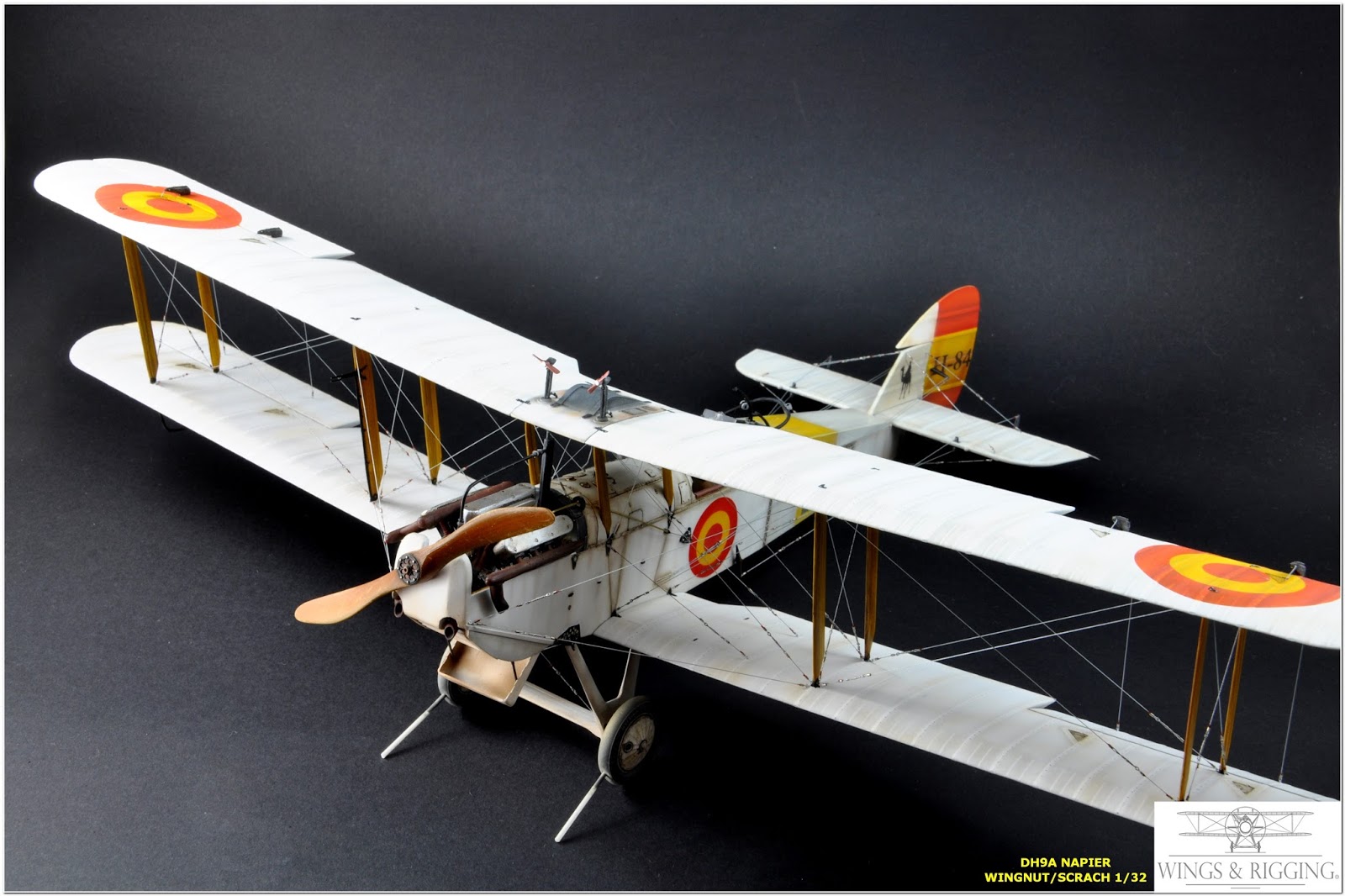
DH9A NAPIER 1/32 “You Shall Go and Return” DH.9A from the Sahara Squadron. Note on the tail the camel, the unit’s emblem, which operated in the Sahara for a brief period in 1928 before being replaced by Breguet aircraft adapted for desert operations. The commander of the Sahara Squadron during the DH.9A period was the decorated Captain Martínez Ramírez. On this aircraft, one can see a swastika painted on the fuselage — a personal marking used by pilots of various nationalities, as this symbol still lacked any political meaning at that time. The enigmatic swastika emblem that the de Havilland “Napiers” carried on their fuselage has sparked much curiosity. In a letter dated January 15th, 1974, Colonel (later General) Jesús Montesinos wrote: _I served on the Napiers in Africa in 1927, and they had magnificent engines — extremely reliable, they never failed. That’s why they bore the swastika, which, mythologically speaking, means something like “You shall go and return.” The crews, therefore, were confident they would complete every mission entrusted to them; they would never be left stranded. The camel insignia was carried by the Sahara DH.9 Squadron, as well as by later units, remaining in use as a unit emblem throughout the 1940s. This model was built using the Wingnut Wings DH.9A 1/32 scale kit. To represent the Spanish version, the entire nose section had to be rebuilt, and a 1/32 scale 450 hp Napier Lion engine was scratch-built from zero. The central fuel tank of the upper wing and the upper generators were also constructed from scratch. DH9A NAPIER 1/32 DH9A NAPIER 1/32 DH9A NAPIER 1/32 DH9A NAPIER 1/32 DH9A NAPIER 1/32 DH9A NAPIER 1/32 “You shall go and return’ — a phrase that captures the spirit of those who always trusted their wings.” — Chema M.