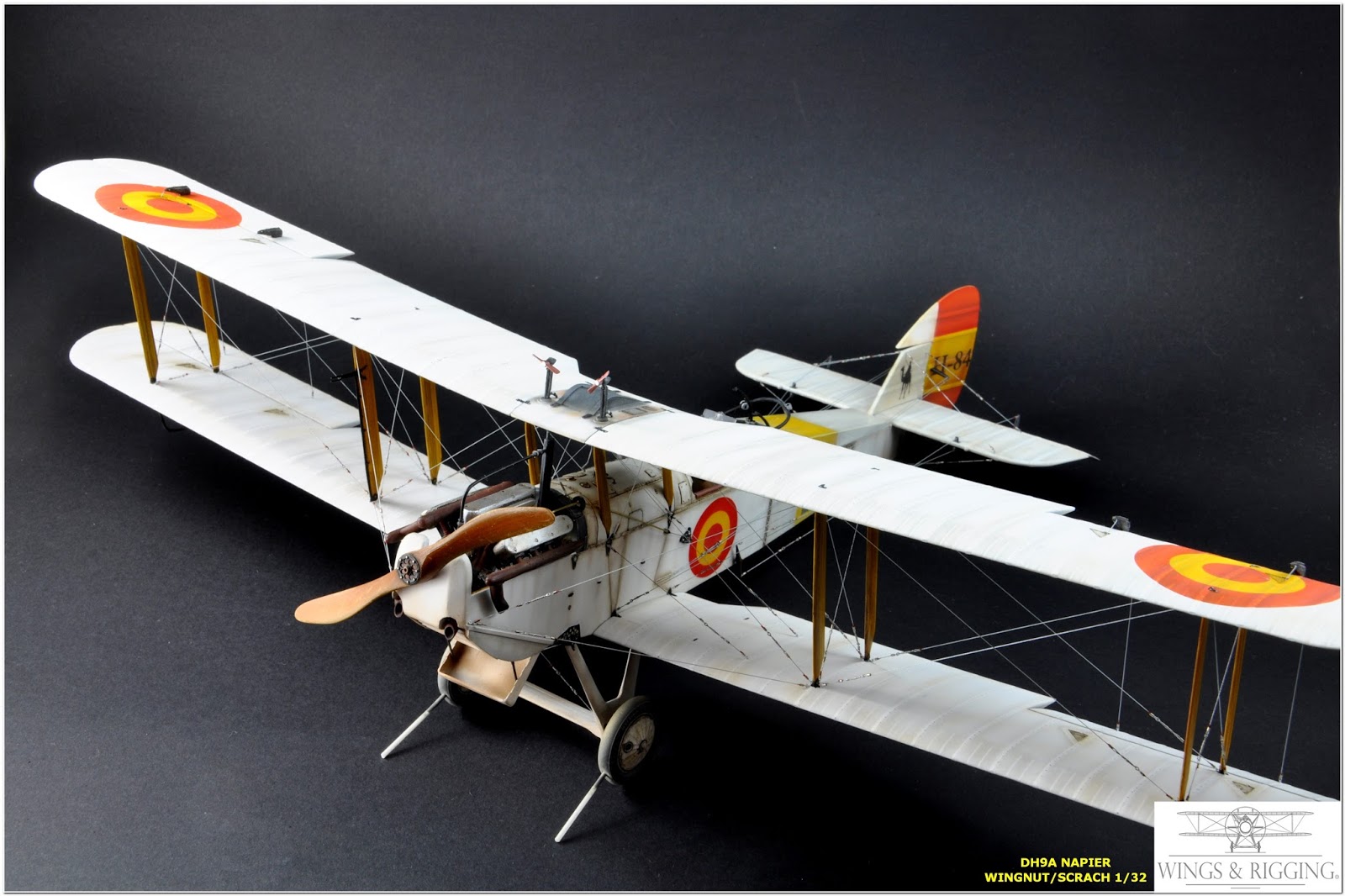
DH9A NAPIER 1/32 “You Shall Go and Return” DH.9A from the Sahara Squadron. Note on the tail the camel, the unit’s emblem, which operated in the Sahara for a brief period in 1928 before being replaced by Breguet aircraft adapted for desert operations. The commander of the Sahara Squadron during the DH.9A period was the decorated Captain Martínez Ramírez. On this aircraft, one can see a swastika painted on the fuselage — a personal marking used by pilots of various nationalities, as this symbol still lacked any political meaning at that time. The enigmatic swastika emblem that the de Havilland “Napiers” carried on their fuselage has sparked much curiosity. In a letter dated January 15th, 1974, Colonel (later General) Jesús Montesinos wrote: _I served on the Napiers in Africa in 1927, and they had magnificent engines — extremely reliable, they never failed. That’s why they bore the swastika, which, mythologically speaking, means something like “You shall go and return.” The crews, therefore, were confident they would complete every mission entrusted to them; they would never be left stranded. The camel insignia was carried by the Sahara DH.9 Squadron, as well as by later units, remaining in use as a unit emblem throughout the 1940s. This model was built using the Wingnut Wings DH.9A 1/32 scale kit. To represent the Spanish version, the entire nose section had to be rebuilt, and a 1/32 scale 450 hp Napier Lion engine was scratch-built from zero. The central fuel tank of the upper wing and the upper generators were also constructed from scratch. DH9A NAPIER 1/32 DH9A NAPIER 1/32 DH9A NAPIER 1/32 DH9A NAPIER 1/32 DH9A NAPIER 1/32 DH9A NAPIER 1/32 “You shall go and return’ — a phrase that captures the spirit of those who always trusted their wings.” — Chema M.
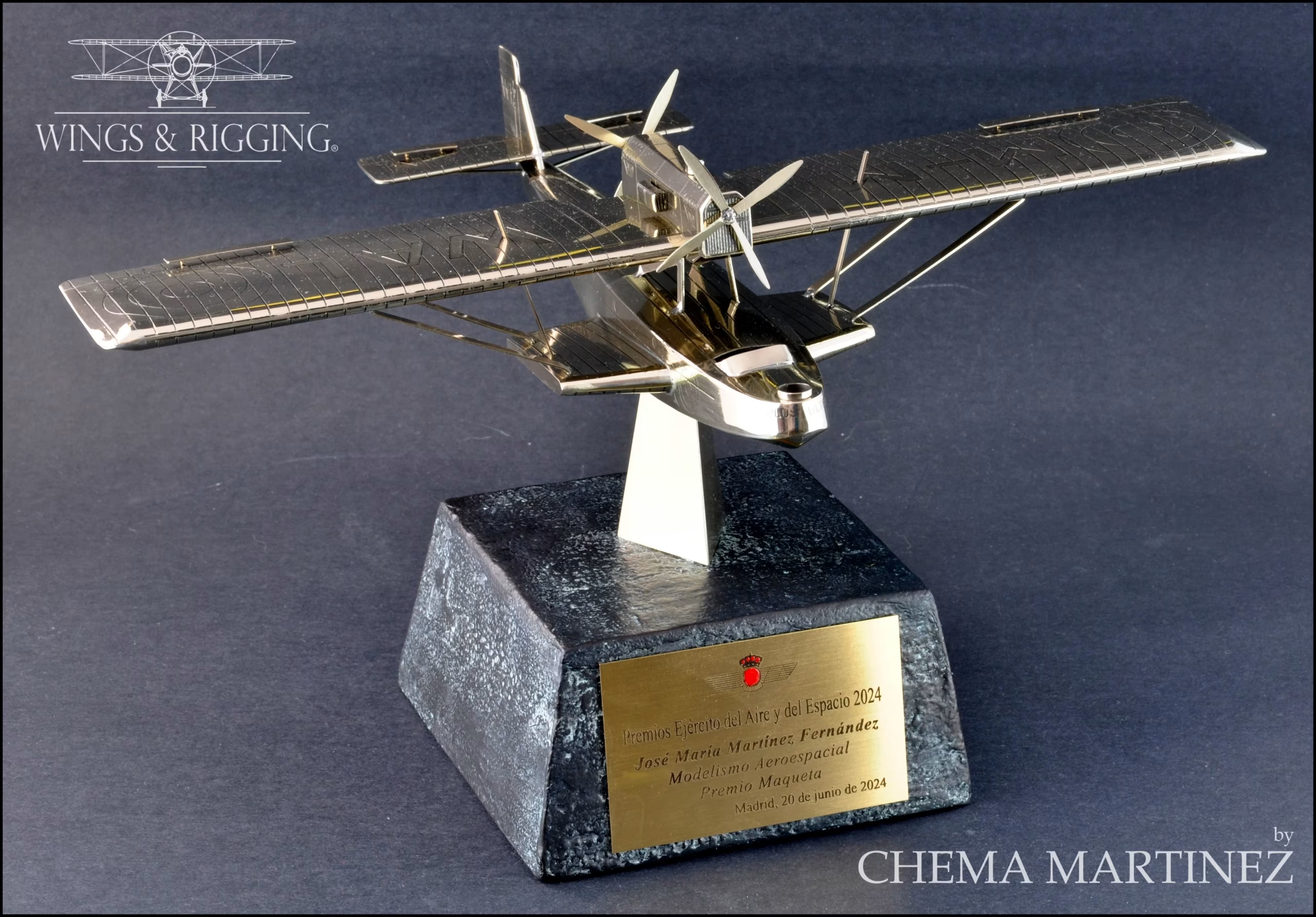
Spanish Air Force Award 2024: the Caudron G.III
CAUDRON G.III “A tribute in scale — honoring the Caudron that trained a generation of Spanish aviators.” A tribute to the 100 officers selected in February 1920 to undergo pilot training on Caudron G.III aircraft at elementary aviation schools such as Cuatro Vientos, Getafe, and Seville. This 1/32 scale plastic kit from Copper State Models has been meticulously refined with the addition of metal turnbuckles from Gaspach Models and an engine adapted using metal rods and copper wiring. The cockpit was scratch‑built and reconfigured into a dual‑control layout to reflect its use in training. Furthermore, the wings were modified to accurately represent the variant that served in the Spanish Air Force. CAUDRON G.III CAUDRON G.III CAUDRON G.III CAUDRON G.III CAUDRON G.III CAUDRON G.III “Each part of this model preserves the memory of those who learned to fly in it.” — Chema M.