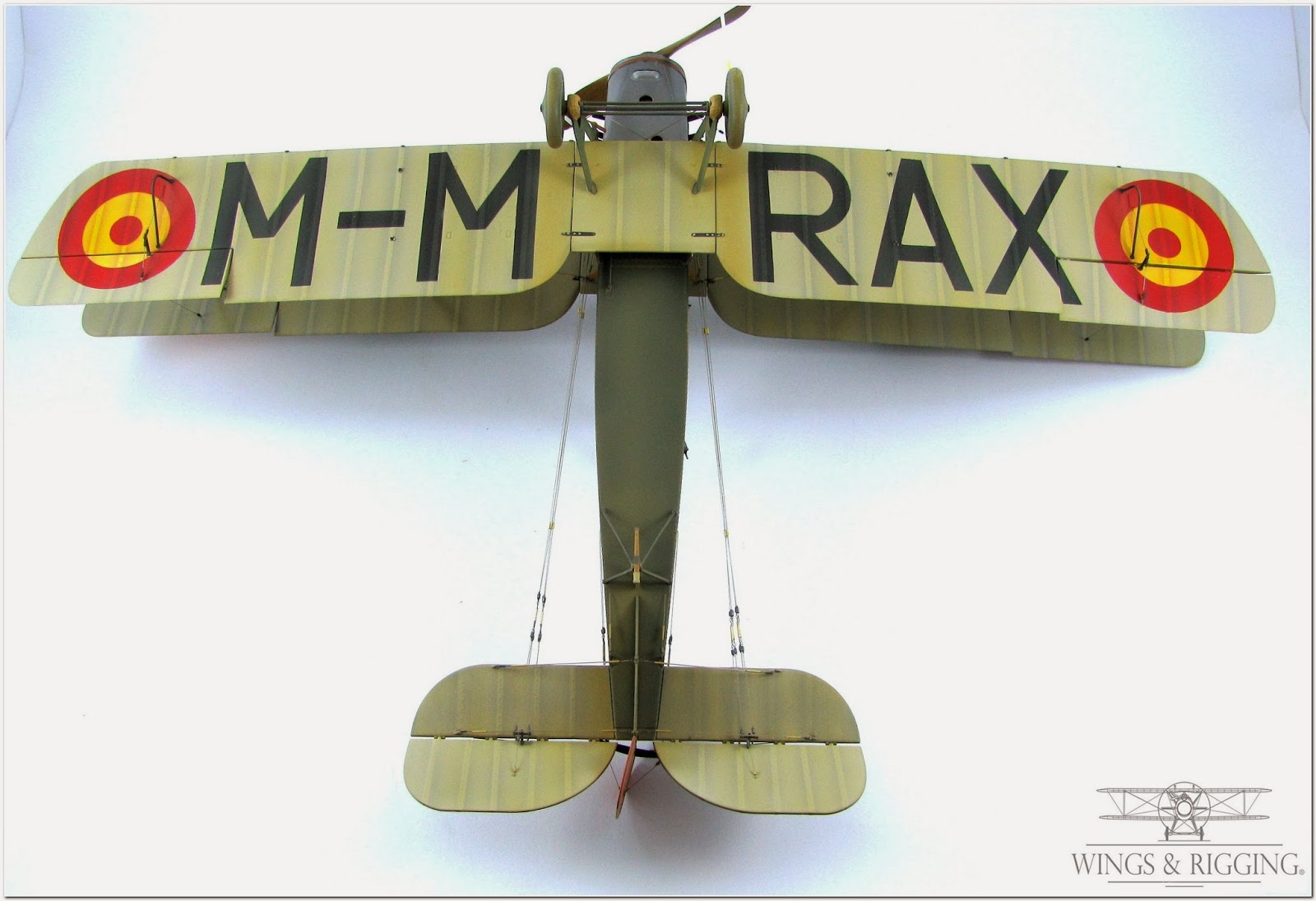
BRISTOL F.2B by Chema Martinez “In Memory of Those Who Never Returned” This is one of my latest completed project, built entirely from plans — 100% scratch. Without a doubt, it has been my greatest moBristol F.2B 1/32 by Wingnut Wings, with a fully reworked engine section and a Roden engine replacement. In memory of Lieutenant Juan Moneo and Sergeant Jesús Cartagena. This Bristol F.2B belonged to the First Squadron and was based at the Tauima airfield in 1925. It was flown by Lieutenant Juan Moneo, with Sergeant Jesús Cartagena serving as the bomber. In the early morning of April 19th, 1925, several aircraft took off from Tauima airfield to fly over the rebel market taking place in Benibuyari del Llano. The aviators descended to low altitude and strafed numerous tribesmen, forcing them to flee. Aircraft M-MRAX B-24, piloted by Lieutenant Moneo with Sergeant Cartagena as bombardier, pursued a group of rebels, engaging them with machine-gun fire. However, a concentrated burst from enemy rifles seriously wounded both men. The aircraft, now out of control, entered a spin and crashed violently into a nearby ravine. Both aviators likely died on impact. In a rescue attempt, forces from the *Harca de Vareja* advanced into hostile territory—about three kilometers from the position at Azib de Midar—recovering the bodies of the fallen. Unable to retrieve the aircraft, they set it on fire to prevent its capture. Other pilots flew overhead, dropping bombs to keep the rebels at a distance. The bodies were brought to the Red Cross hospital, where their comrades kept vigil through the night. Lieutenant Moneo was a close friend of Lieutenant Muñoz, who had died in the same area just days earlier, under similar circumstances. Upon learning of the tragedy, the airfield commander, Fernández, and Lieutenant Lastra flew immediately to Azib de Midar. BRISTOL F.2B by Chema Martinez BRISTOL F.2B by Chema Martinez BRISTOL F.2B by Chema Martinez BRISTOL F.2B by Chema Martinez BRISTOL F.2B by Chema Martinez BRISTOL F.2B by Chema Martinez “Their wings fell before their courage did — may this model keep alive the memory of those who gave everything in the skies of Tauima.” — Chema M.

LVG C.VI
LVG C.VI by Chema Martinez “The Silent Eyes of the Western Front” The LVG C.VI was a reconnaissance aircraft built by Luftverkehrsgesellschaft in 1917 — the company from which its initials derive. The aircraft was designed by Willy Sabersky-Müssigbrodt. Developed from the earlier C.V model, the C.VI was lighter, smaller, and more refined, even though its fuselage appeared more solid. It was a biplane built mostly of mixed wood construction; the fuselage used a semi-monocoque plywood skin. The rectangular wings were made of wood and metal and covered with fabric. The upper wing had a slightly greater span than the lower one, and the fin was plywood-covered wood, while the rudder and elevators were wooden framed and fabric-covered. It was powered by a six-cylinder Benz Bz.IV water-cooled engine producing 200 hp, giving it a top speed of 170 km/h and a service ceiling of 6,500 meters. The engine radiator was mounted in the central section of the upper wing. Armament consisted of two machine guns — one fixed Spandau LMG 08/15 and, depending on the version, either a Parabellum LMG 14/17 or a Parabellum LMG 14 mounted on a flexible ring for the observer. It featured a fixed landing gear and a tailskid. The aircraft was equipped with a Morse radio that could only transmit, using an antenna deployed beneath the fuselage. The crew carried parachutes and special cold-weather flight suits. A total of around 1,100 units were built. Most LVG aircraft were used by the German Air Service during the final operations of the First World War, especially on the Western Front, for reconnaissance and artillery spotting. The Model: The kit is by Wingnut Wings in 1/32 scale, and its quality is simply outstanding. The level of detail is superb. It includes a total of 166 plastic parts spread across seven sprues — one of them clear — each individually bagged to prevent friction. The kit also includes a photo-etched sheet for the seatbelts and four Cartograf decal sheets with *lozenge* patterns and markings for seven different aircraft. It only lacks a photo-etched part to simulate the cooling jackets of the machine guns, but apart from that, it’s an excellent, highly detailed kit with great potential for realistic finishes. LVG C.VI by Chema Martinez LVG C.VI by Chema Martinez LVG C.VI by Chema Martinez LVG C.VI by Chema Martinez LVG C.VI by Chema Martinez “Built for observation and endurance, the LVG C.VI reminds us that not all heroes in the sky carried bombs — some carried only their eyes and their courage.” — Chema M.

LOHNER Type L, 1/32 – 100% Scratchbuilt
LOHNER Type L by Chema Martinez “From Plans to Wings” This is one of my latest completed project, built entirely from plans — 100% scratch. Without a doubt, it has been my greatest modeling challenge so far, a truly fascinating journey that I’ll surely repeat with other aircraft. Hope you like it. LOHNER Type L by Chema Martinez LOHNER Type L by Chema Martinez LOHNER Type L by Chema Martinez LOHNER Type L by Chema Martinez LOHNER Type L by Chema Martinez LOHNER Type L by Chema Martinez “Creating from nothing is the closest way to understand how these machines once came to life.” — Chema M.
DH9A NAPIER 1/32
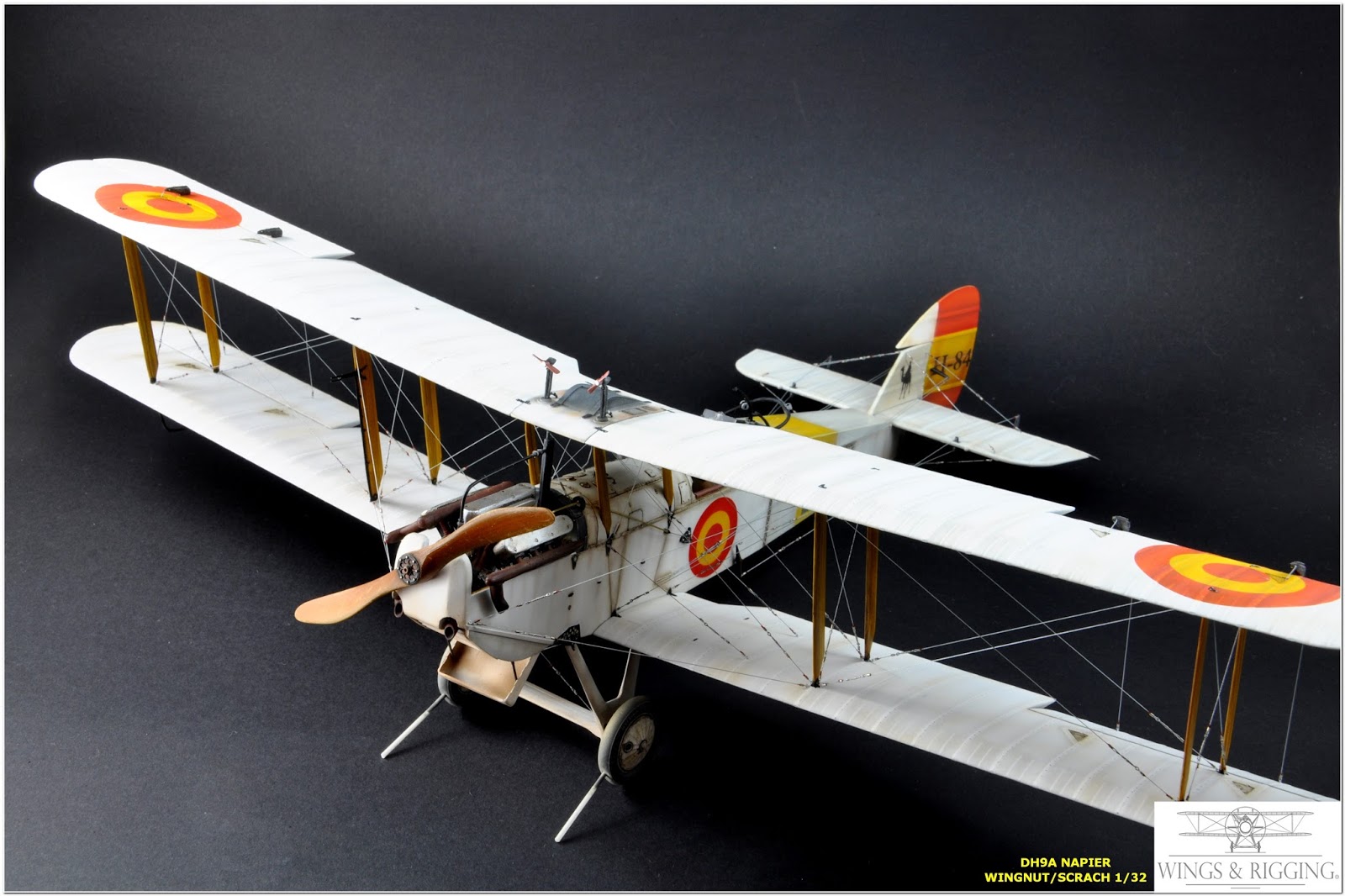
DH9A NAPIER 1/32 “You Shall Go and Return” DH.9A from the Sahara Squadron. Note on the tail the camel, the unit’s emblem, which operated in the Sahara for a brief period in 1928 before being replaced by Breguet aircraft adapted for desert operations. The commander of the Sahara Squadron during the DH.9A period was the decorated Captain Martínez Ramírez. On this aircraft, one can see a swastika painted on the fuselage — a personal marking used by pilots of various nationalities, as this symbol still lacked any political meaning at that time. The enigmatic swastika emblem that the de Havilland “Napiers” carried on their fuselage has sparked much curiosity. In a letter dated January 15th, 1974, Colonel (later General) Jesús Montesinos wrote: _I served on the Napiers in Africa in 1927, and they had magnificent engines — extremely reliable, they never failed. That’s why they bore the swastika, which, mythologically speaking, means something like “You shall go and return.” The crews, therefore, were confident they would complete every mission entrusted to them; they would never be left stranded. The camel insignia was carried by the Sahara DH.9 Squadron, as well as by later units, remaining in use as a unit emblem throughout the 1940s. This model was built using the Wingnut Wings DH.9A 1/32 scale kit. To represent the Spanish version, the entire nose section had to be rebuilt, and a 1/32 scale 450 hp Napier Lion engine was scratch-built from zero. The central fuel tank of the upper wing and the upper generators were also constructed from scratch. DH9A NAPIER 1/32 DH9A NAPIER 1/32 DH9A NAPIER 1/32 DH9A NAPIER 1/32 DH9A NAPIER 1/32 DH9A NAPIER 1/32 “You shall go and return’ — a phrase that captures the spirit of those who always trusted their wings.” — Chema M.