Felixstowe F.2a – Interior This large flying boat is my recommendation If you are looking for a truly demanding challenge in aircraft scale modeling, this large flying boat is my recommendation. The Felixstowe F.2a was one of the greatest challenges I have ever faced, mainly due to its large size. I decided to leave the upper section open, as the interior details are truly spectacular. I carried out several painting tests on the wings until I developed a new technique that successfully replicated the linen-covered fabric, adding a high level of realism. I also experimented with new products on the hull to reproduce the weathering caused by constant exposure to the sea. The sheer number of rigging wires, struts, and attachment points required between the wing connections exceeded 200 individual elements, making the rigging phase particularly demanding. There are many references about this aircraft but this Felixstowe F.2a was the most successful flying boat of the First World War, operated by a five-man crew for long-range reconnaissance, anti-submarine, and anti-shipping missions lasting up to ten hours. Its design evolved from the pre-war Anglo-American Curtiss “America” flying boat, progressively improved by Glenn Curtiss and Cyril Porte. By 1917, Porte developed the distinctive deep V-shaped hull that defined the Felixstowe series, developed at the RNAS Seaplane Experimental Station in Felixstowe. Powered by twin Rolls-Royce Eagle VIII engines, the F.2a featured advanced boat-style construction and underwent multiple refinements, including changes to cockpit configuration, control surfaces, and hull strengthening. Variants included the American-built Curtiss H.16 with Liberty engines. Related models such as the larger F.3 and F.5 were produced but were generally considered inferior, with the F.5 arriving too late for wartime service. Felixstowe flying boats were typically finished with dark-painted upper wings, clear-doped linen undersurfaces, and black bituminous waterproofing on hull areas and fittings. These aircraft often weathered quickly in maritime conditions, and from mid-1918 some were painted in brightly colored dazzle schemes for identification. Felixstowe Felixstowe F.2a – Interior “Felixstowe F.2a was the most successful flying boat of the First World War” — Chema M. Lorem ipsum dolor sit amet, consectetur adipiscing elit. Ut elit tellus, luctus nec ullamcorper mattis, pulvinar dapibus leo.

R.A.F. SE.5a HISSO
R.A.F. SE.5a Hisso by Chema Martinez A VETERAN OF THE GREAT WAR IN SPAIN At the end of the Great War, surplus aircraft were handed over to Aircraft Disposal, from which the Spanish Military Aeronautics is believed to have purchased one example — although some sources suggest that two may have entered service — around 1919, when a wave of second-hand aircraft arrived in Spain. There is little documented information about this particular airplane and its operational service, but it officially entered service with the Spanish Army Air Corps in 1919. On its fuselage sides, the aircraft sported a witch riding a broomstick — it is not clear whether this was a personal emblem or the marking of a specific unit. What is known is that a nearly identical witch motif also appeared on a Breguet XIV. The model includes a figure of a Spanish pilot wearing a 1919 flight suit, based on an illustration by artist Delfín Salas. R.A.F. SE.5a Hisso by Chema Martinez R.A.F. SE.5a Hisso by Chema Martinez R.A.F. SE.5a Hisso by Chema Martinez R.A.F. SE.5a Hisso by Chema Martinez “Some aircraft may grow old, but their stories still carry the wind of the skies they once conquered.” — Chema M.
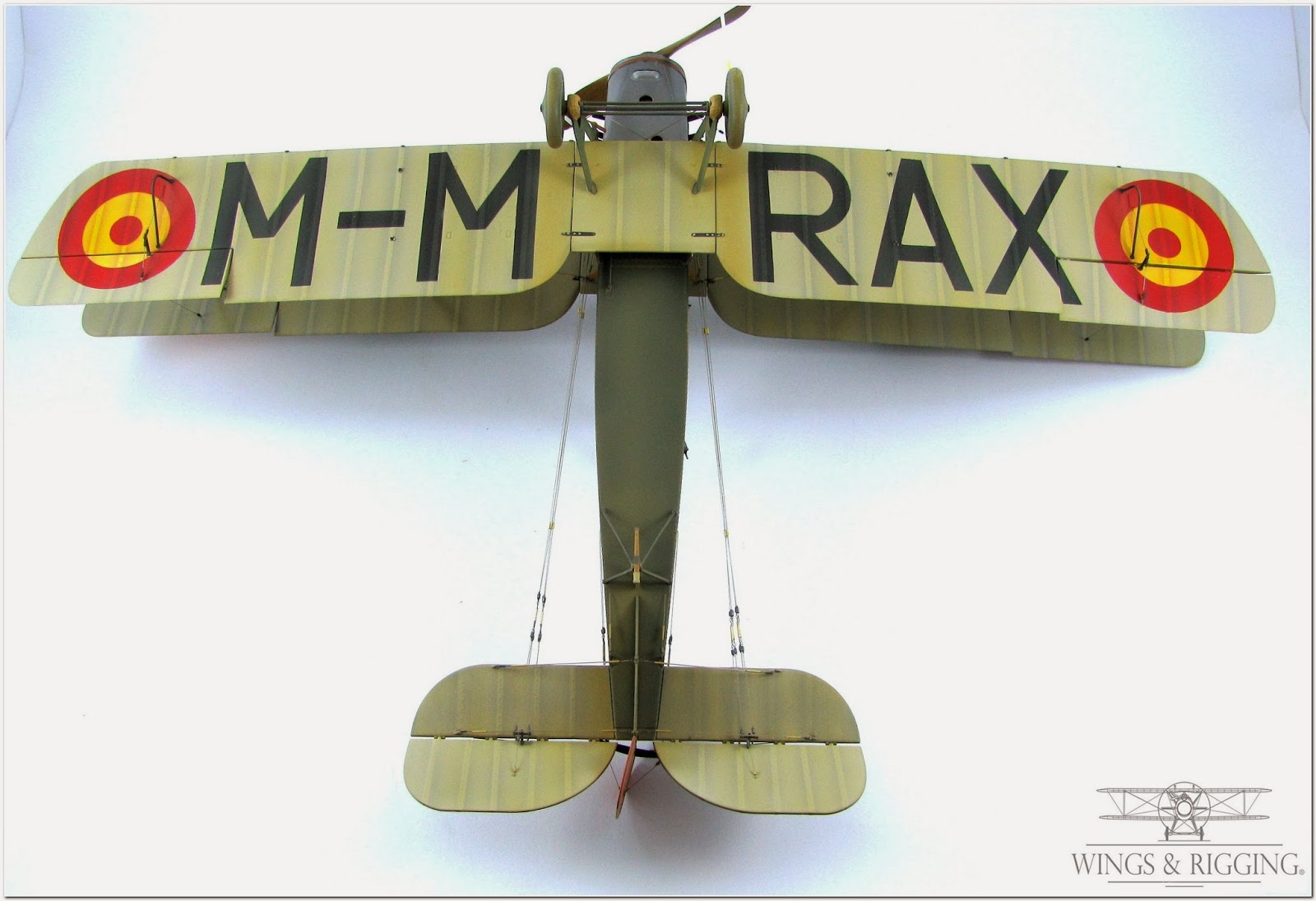
BRISTOL F.2B – FIRST SQUADRON
BRISTOL F.2B by Chema Martinez “In Memory of Those Who Never Returned” This is one of my latest completed project, built entirely from plans — 100% scratch. Without a doubt, it has been my greatest moBristol F.2B 1/32 by Wingnut Wings, with a fully reworked engine section and a Roden engine replacement. In memory of Lieutenant Juan Moneo and Sergeant Jesús Cartagena. This Bristol F.2B belonged to the First Squadron and was based at the Tauima airfield in 1925. It was flown by Lieutenant Juan Moneo, with Sergeant Jesús Cartagena serving as the bomber. In the early morning of April 19th, 1925, several aircraft took off from Tauima airfield to fly over the rebel market taking place in Benibuyari del Llano. The aviators descended to low altitude and strafed numerous tribesmen, forcing them to flee. Aircraft M-MRAX B-24, piloted by Lieutenant Moneo with Sergeant Cartagena as bombardier, pursued a group of rebels, engaging them with machine-gun fire. However, a concentrated burst from enemy rifles seriously wounded both men. The aircraft, now out of control, entered a spin and crashed violently into a nearby ravine. Both aviators likely died on impact. In a rescue attempt, forces from the *Harca de Vareja* advanced into hostile territory—about three kilometers from the position at Azib de Midar—recovering the bodies of the fallen. Unable to retrieve the aircraft, they set it on fire to prevent its capture. Other pilots flew overhead, dropping bombs to keep the rebels at a distance. The bodies were brought to the Red Cross hospital, where their comrades kept vigil through the night. Lieutenant Moneo was a close friend of Lieutenant Muñoz, who had died in the same area just days earlier, under similar circumstances. Upon learning of the tragedy, the airfield commander, Fernández, and Lieutenant Lastra flew immediately to Azib de Midar. BRISTOL F.2B by Chema Martinez BRISTOL F.2B by Chema Martinez BRISTOL F.2B by Chema Martinez BRISTOL F.2B by Chema Martinez BRISTOL F.2B by Chema Martinez BRISTOL F.2B by Chema Martinez “Their wings fell before their courage did — may this model keep alive the memory of those who gave everything in the skies of Tauima.” — Chema M.

LVG C.VI
LVG C.VI by Chema Martinez “The Silent Eyes of the Western Front” The LVG C.VI was a reconnaissance aircraft built by Luftverkehrsgesellschaft in 1917 — the company from which its initials derive. The aircraft was designed by Willy Sabersky-Müssigbrodt. Developed from the earlier C.V model, the C.VI was lighter, smaller, and more refined, even though its fuselage appeared more solid. It was a biplane built mostly of mixed wood construction; the fuselage used a semi-monocoque plywood skin. The rectangular wings were made of wood and metal and covered with fabric. The upper wing had a slightly greater span than the lower one, and the fin was plywood-covered wood, while the rudder and elevators were wooden framed and fabric-covered. It was powered by a six-cylinder Benz Bz.IV water-cooled engine producing 200 hp, giving it a top speed of 170 km/h and a service ceiling of 6,500 meters. The engine radiator was mounted in the central section of the upper wing. Armament consisted of two machine guns — one fixed Spandau LMG 08/15 and, depending on the version, either a Parabellum LMG 14/17 or a Parabellum LMG 14 mounted on a flexible ring for the observer. It featured a fixed landing gear and a tailskid. The aircraft was equipped with a Morse radio that could only transmit, using an antenna deployed beneath the fuselage. The crew carried parachutes and special cold-weather flight suits. A total of around 1,100 units were built. Most LVG aircraft were used by the German Air Service during the final operations of the First World War, especially on the Western Front, for reconnaissance and artillery spotting. The Model: The kit is by Wingnut Wings in 1/32 scale, and its quality is simply outstanding. The level of detail is superb. It includes a total of 166 plastic parts spread across seven sprues — one of them clear — each individually bagged to prevent friction. The kit also includes a photo-etched sheet for the seatbelts and four Cartograf decal sheets with *lozenge* patterns and markings for seven different aircraft. It only lacks a photo-etched part to simulate the cooling jackets of the machine guns, but apart from that, it’s an excellent, highly detailed kit with great potential for realistic finishes. LVG C.VI by Chema Martinez LVG C.VI by Chema Martinez LVG C.VI by Chema Martinez LVG C.VI by Chema Martinez LVG C.VI by Chema Martinez “Built for observation and endurance, the LVG C.VI reminds us that not all heroes in the sky carried bombs — some carried only their eyes and their courage.” — Chema M.

LOHNER Type L, 1/32 – 100% Scratchbuilt
LOHNER Type L by Chema Martinez “From Plans to Wings” This is one of my latest completed project, built entirely from plans — 100% scratch. Without a doubt, it has been my greatest modeling challenge so far, a truly fascinating journey that I’ll surely repeat with other aircraft. Hope you like it. LOHNER Type L by Chema Martinez LOHNER Type L by Chema Martinez LOHNER Type L by Chema Martinez LOHNER Type L by Chema Martinez LOHNER Type L by Chema Martinez LOHNER Type L by Chema Martinez “Creating from nothing is the closest way to understand how these machines once came to life.” — Chema M.
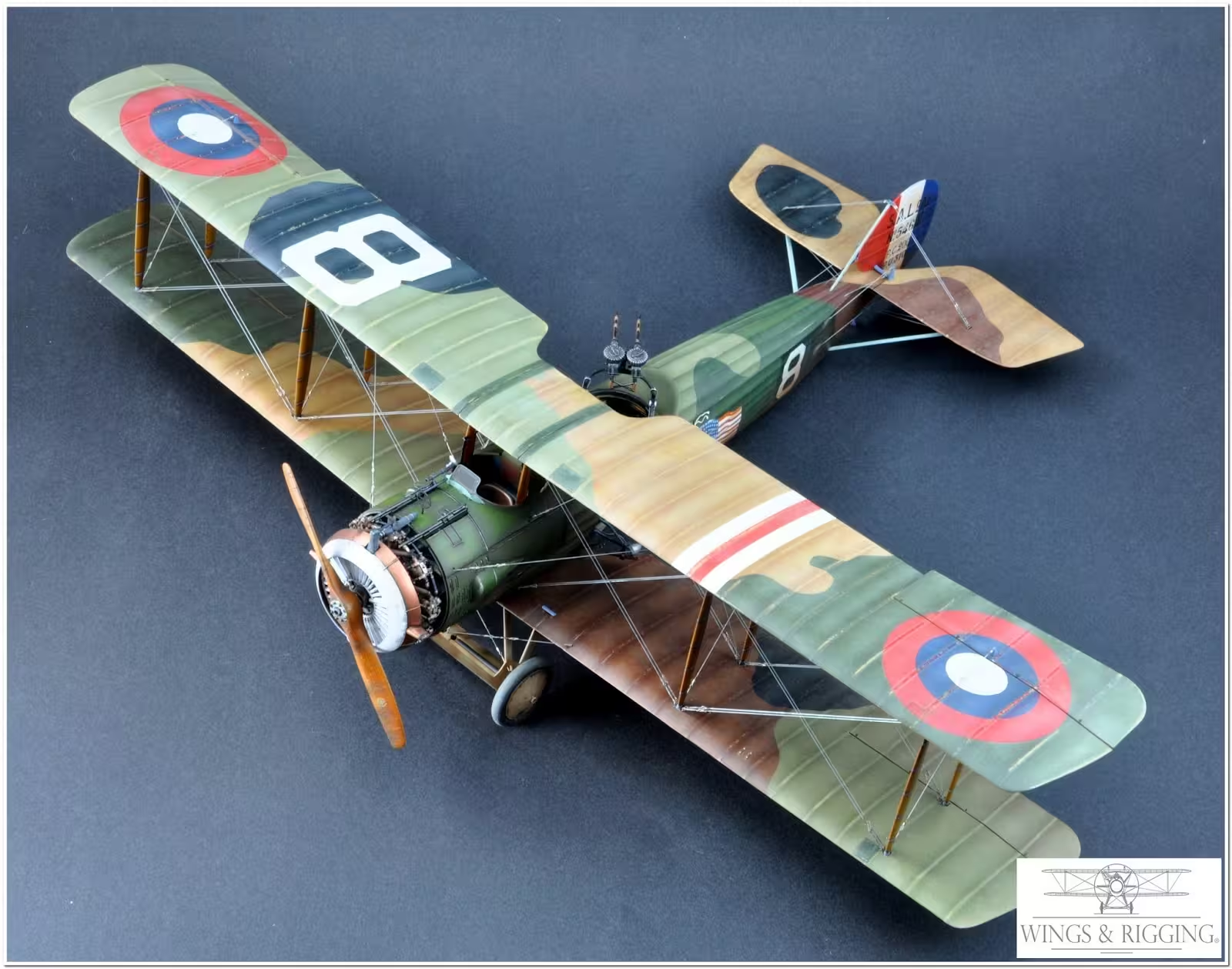
SALMSON 2-A2 USAS
SALMSON-2-A2-USAS “A slow build, a clear direction — the Salmson as a turning point.” This 1/32 scale kit from Wingnut Wings exemplifies the brand’s renowned craftsmanship and attention to detail. I applied subtle enhancements to the engine using fine wiring, and incorporated turnbuckles from Gaspacht Models to refine the rigging. The entire airframe was painted using masking techniques, with the exception of the American flag and rudder markings, which were applied as decals. The build progressed gradually over the span of several years, completed in intermittent sessions. I chose to finalize it as an opportunity to experiment with new painting methods and materials, all in preparation for ongoing projects. I’m highly satisfied with the outcome — it represents a direction I intend to pursue further. I hope you appreciate the final result. SALMSON-2-A2-USAS SALMSON-2-A2-USAS SALMSON-2-A2-USAS SALMSON-2-A2-USAS SALMSON-2-A2-USAS SALMSON-2-A2-USAS “Every session, every pause, every detail: the Salmson taught me patience and direction.” — Chema M.
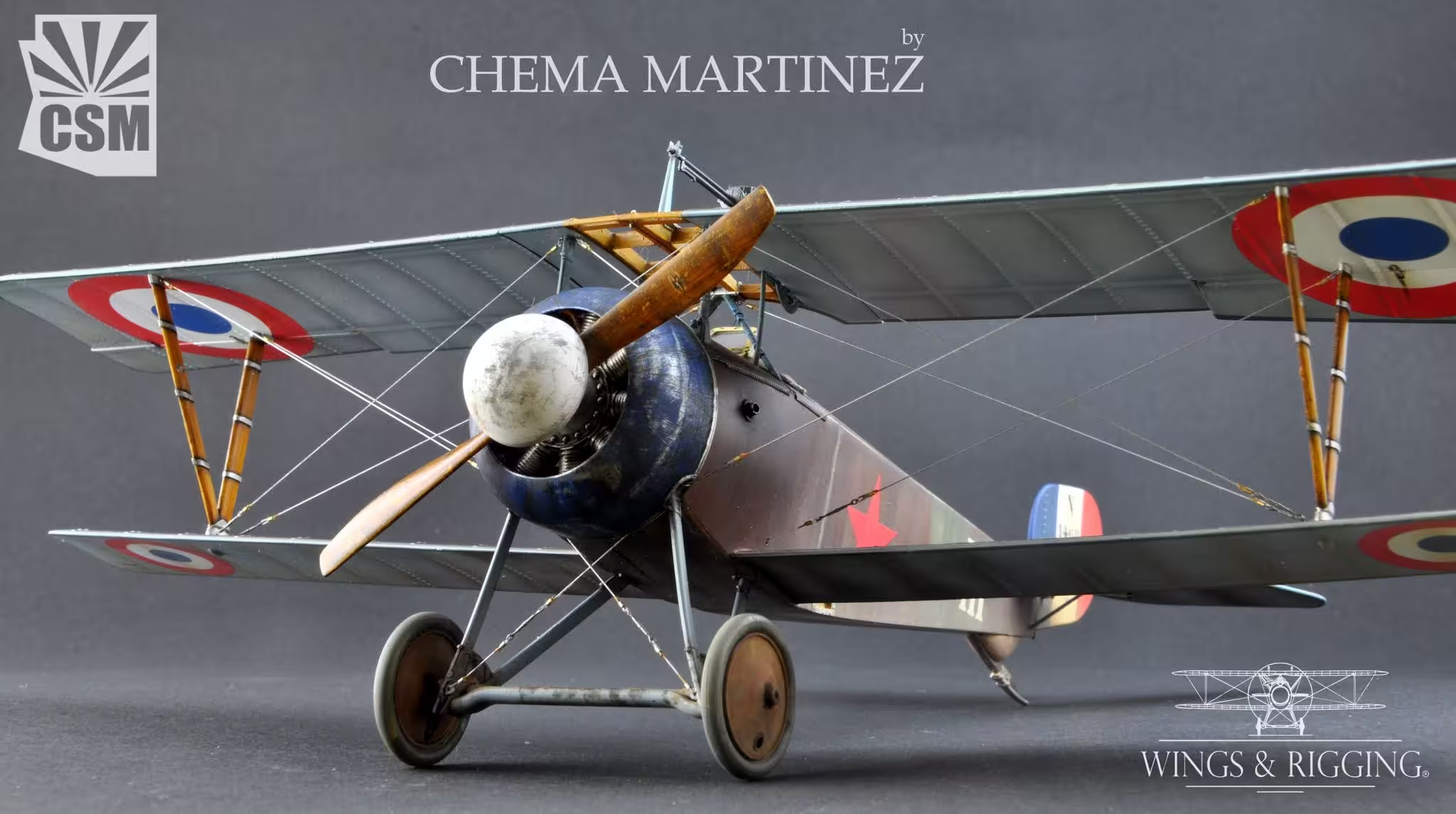
NIEUPORT XVII EARLY
NIEUPORT XVII EARLY “The beginning of a legacy — where precision meets potential.” This 1/32 scale kit from Copper State Models represents the inaugural release in their Nieuport series. The overall quality is exceptional—comparable to the most prestigious brands in the industry. The parts fit together with remarkable precision, and with the addition of a few enhancements, the final result can be truly outstanding. NIEUPORT XVII EARLY NIEUPORT XVII EARLY NIEUPORT XVII EARLY NIEUPORT XVII EARLY NIEUPORT XVII EARLY NIEUPORT XVII EARLY “The beginning of a series that honors the precision, history, and character of the Nieuport.” — Chema M.
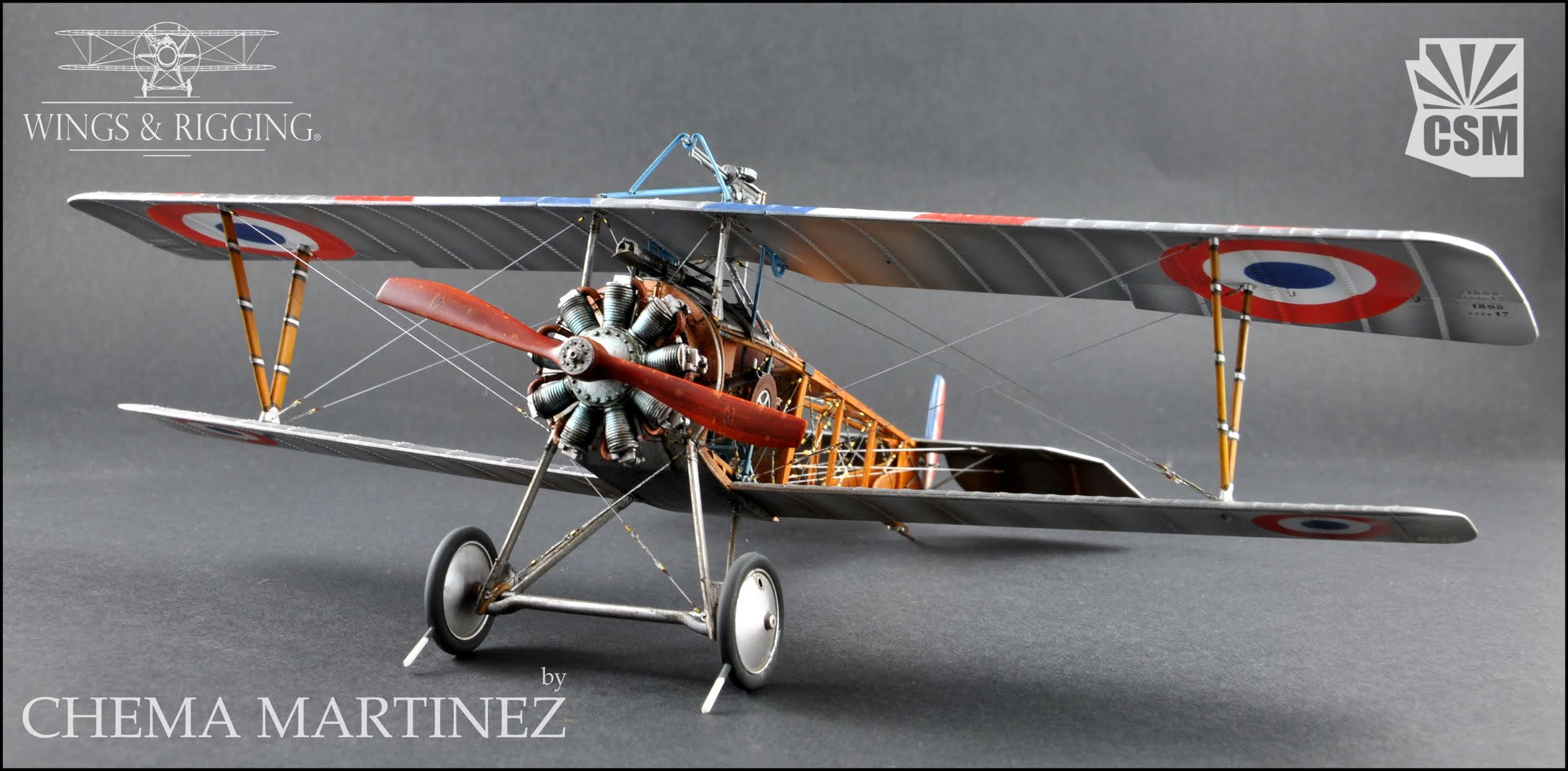
NIEUPORT XVII LATE
NIEUPORT XVII EARLY “The Nieuport does not easily reveal itself — you have to open it to truly understand it.” This marks my second build of the Nieuport model from Copper State Models. For this project, I set out to maximize the potential of the kit’s exceptional molding quality by undertaking an extensive super-detailing process. My focus was to faithfully reconstruct the aircraft’s interior—exposing the fuselage and meticulously crafting each internal component with precision and care. I trust you will appreciate the result. NIEUPORT XVII EARLY NIEUPORT XVII EARLY NIEUPORT XVII EARLY NIEUPORT XVII EARLY NIEUPORT XVII EARLY NIEUPORT XVII EARLY “It’s not just an airplane — it’s a story laid bare in every rib, every shadow, every thread.” — Chema M.
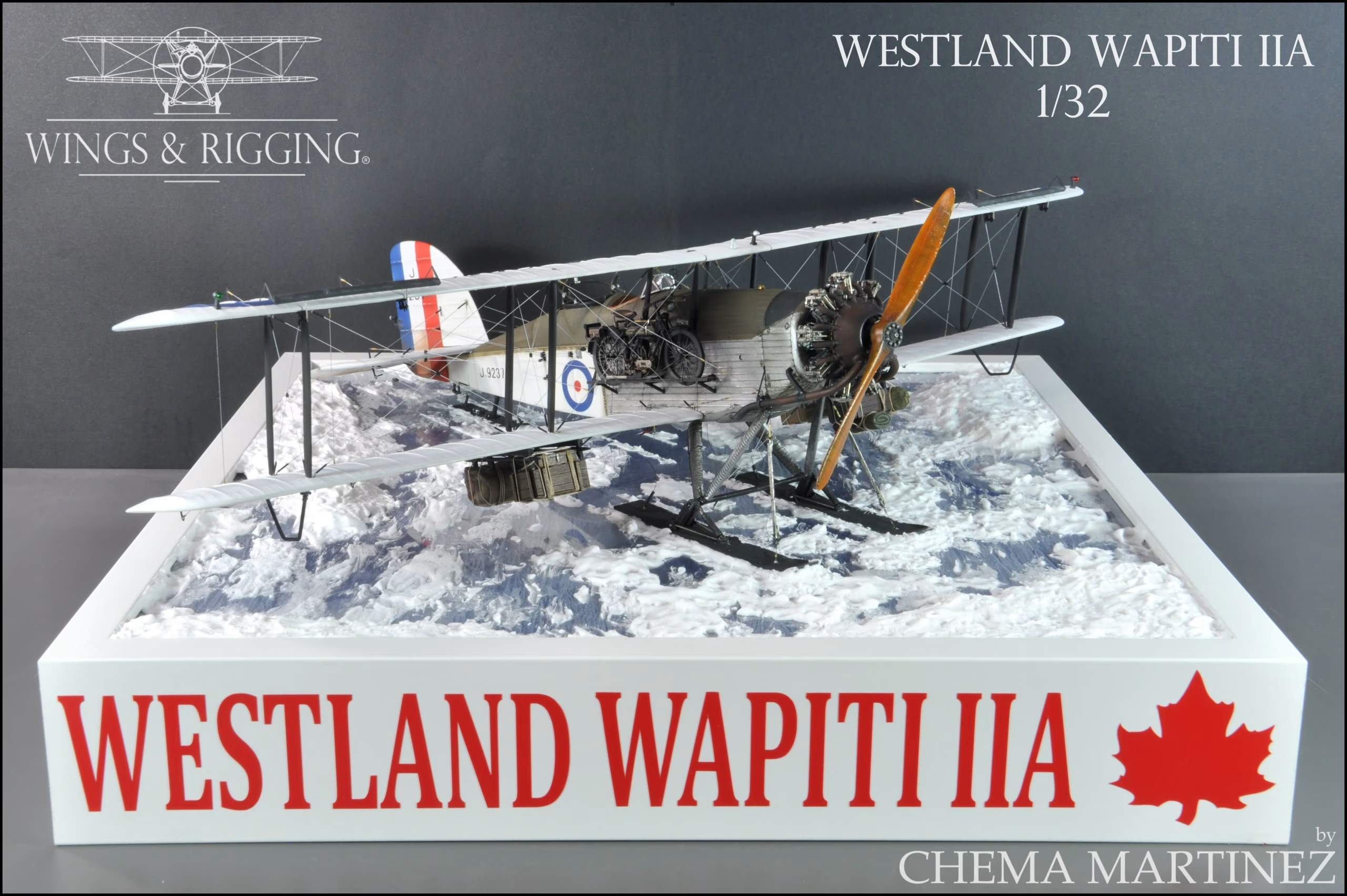
WESTLAND WAPITI IIA
WESTLAND WAPITI IIA “This build explores the operational adaptations of a Royal Canadian Air Force aircraft in extreme environments, reconstructed in 1/32 scale with archival precision.” This 1/32 scale Lukgraph model has been reconfigured to represent a Royal Canadian Air Force aircraft, featuring custom-built skis fabricated from scratch to replace the original landing gear. Logistical equipment was added to the bomb racks, based on archival photographs of the actual aircraft. To enrich the narrative and setting, a 1/32 scale British TR.Model H motorcycle from Copper State Models was incorporated into a frozen lake scene, inspired by imagery published in Kestrel Aerospace Profiles by T.F.J. Leversedge. WESTLAND WAPITI IIA WESTLAND WAPITI IIA WESTLAND WAPITI IIA WESTLAND WAPITI IIA WESTLAND WAPITI IIA WESTLAND WAPITI IIA Every ski, every insignia, every shadow — the Wapiti IIA rebuilt with historical reverence — Chema M.