RE.8 HARRY TATE by Chema Martinez “The Eyes of the Great War” The RE.8 was a British two-seat biplane used for reconnaissance and bombing missions during the First World War. It was designed by John Kenworthy to replace the more vulnerable BE2. The RE.8, however, proved harder to fly, and at first, it was met with reluctance by the Royal Flying Corps. Although it eventually provided reasonably satisfactory service, it was never considered an outstanding combat aircraft. Despite its limitations, the RE.8 became the standard British reconnaissance and artillery observation aircraft from mid-1917 until the end of the war. More than 4,000 units were produced, serving in nearly all theatres — including Italy, Russia, Palestine, Mesopotamia, and, of course, the Western Front. The Model: This 1/32 scale model by Wingnut Wings is, as usual for the brand, a superb kit with exceptional attention to detail. It offers five different marking options and consists of 295 plastic parts and 15 photo-etched pieces. The engine itself is a miniature model, beautifully designed, and the instruction manual — complete with clear photos — guides the build perfectly step by step. RE.8 HARRY TATE by Chema Martinez RE.8 HARRY TATE by Chema Martinez RE.8 HARRY TATE by Chema Martinez RE.8 HARRY TATE by Chema Martinez RE.8 HARRY TATE by Chema Martinez RE.8 HARRY TATE by Chema Martinez “Some aircraft may not have shined in combat, but they carried the silent duty of observation — and that, too, deserves to be remembered.” — Chema M.
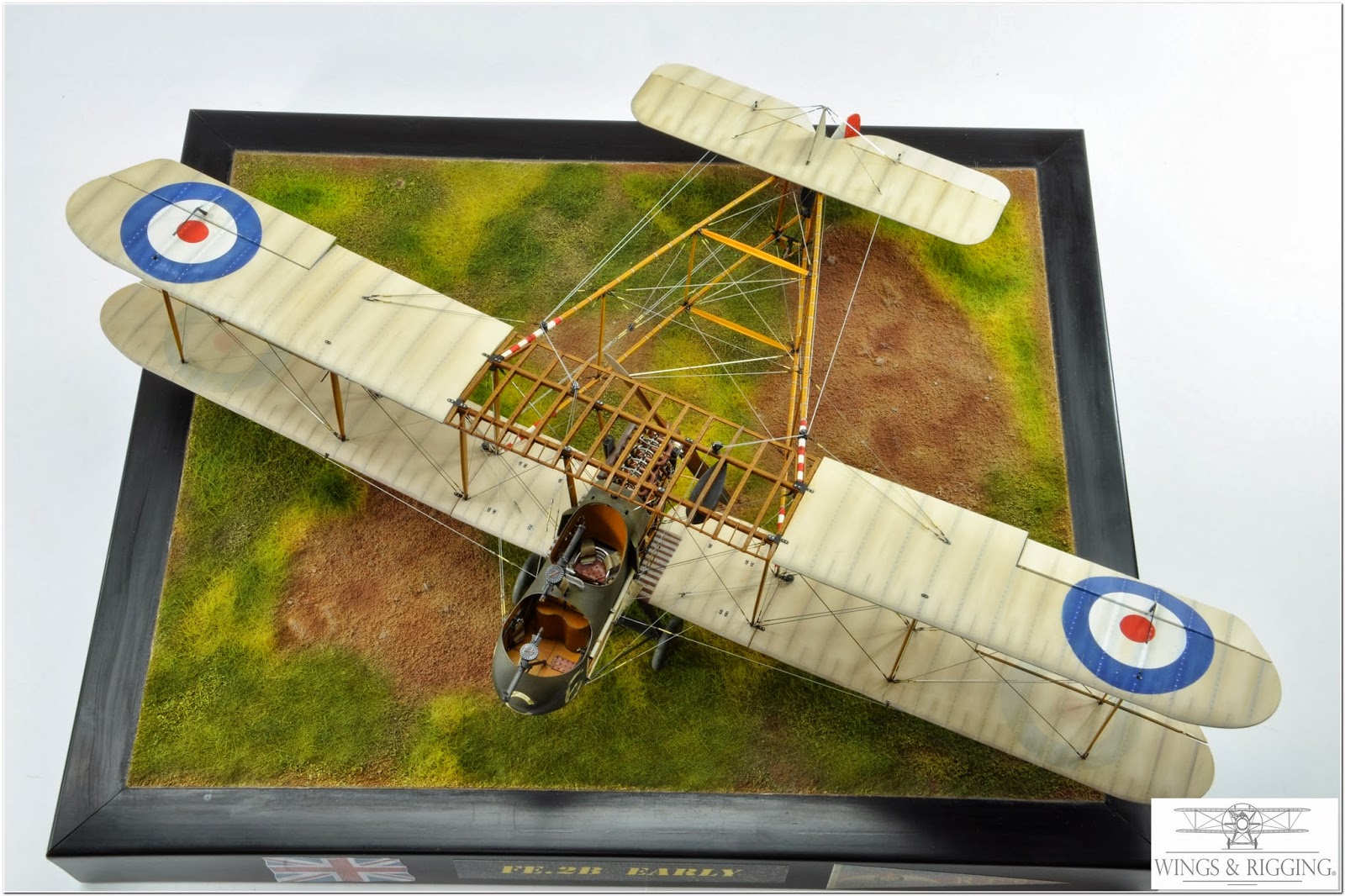
FE.2B EARLY
FE.2B EARLY by Chema Martinez “The Project That Took Flight” This project first began to take shape during my very first visit to Scale Model World Telford in 2011. While wandering among the countless stands, I came across a couple of truly amazing books about this aircraft. As a WWI enthusiast and follower of the Wingnut Wings brand, I had already heard rumors that they were planning to release this model — so, the moment I saw those books, it was clear what my next project would be. A little over a month after returning from Telford, the New Zealand company launched the kit in two different versions: Early and Late. Unable to choose between them, I decided to buy both. That’s when this project began — one that, without a doubt, has tested every one of my modeling skills. The Project: Once the two kits were in my hands, I sat down comfortably on the sofa to enjoy and study both. The first step was to choose which aircraft to build. I went through all the markings and schemes from both versions, and since I felt like building a linen-colored aircraft, the Early version was the one. With the choice made, it was time to plan the build. Following the same approach as in my recent Wingnut Wings projects — and given the outstanding detail of both the interior and the engine — I decided that these two elements would be the main focus of this build. FE.2B EARLY by Chema Martinez FE.2B EARLY by Chema Martinez FE.2B EARLY by Chema Martinez FE.2B EARLY by Chema Martinez FE.2B EARLY by Chema Martinez FE.2B EARLY by Chema Martinez “Some projects begin as ideas, but end up becoming journeys — this one truly made me fly further as a modeler.” — Chema M.

BRISTOL F2B “THE CROCODILE”
BRISTOL F2B – “THE CROCODILE” “Inside the Spirit of a Great War Machine” For the foundation of this project, I used the Wingnut Wings 1/32 scale kit. The idea was to show an aircraft from that era from the inside. It has been a truly complex but fascinating job because of its difficulty — without a doubt, one of my greatest modeling challenges, from which I’ve learned an enormous amount for future projects. BRISTOL F2B – “THE CROCODILE” BRISTOL F2B – “THE CROCODILE” BRISTOL F2B – “THE CROCODILE” BRISTOL F2B – “THE CROCODILE” BRISTOL F2B – “THE CROCODILE” BRISTOL F2B – “THE CROCODILE” “This work was awarded the gold medal for Best 1/32 WWI Aircraft at Scale Model World Telford 2013.” — Chema M.
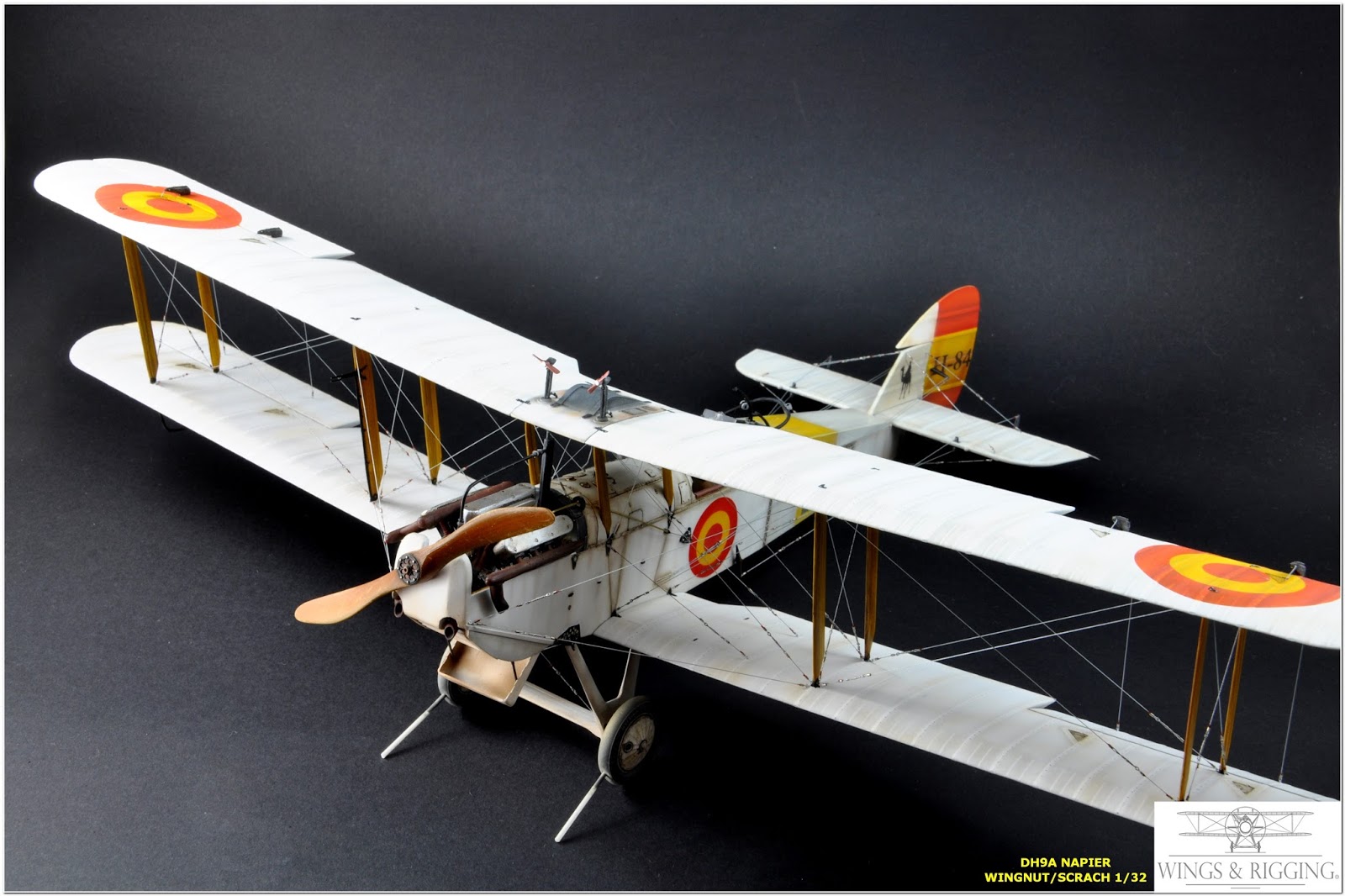
DH9A NAPIER 1/32
DH9A NAPIER 1/32 “You Shall Go and Return” DH.9A from the Sahara Squadron. Note on the tail the camel, the unit’s emblem, which operated in the Sahara for a brief period in 1928 before being replaced by Breguet aircraft adapted for desert operations. The commander of the Sahara Squadron during the DH.9A period was the decorated Captain Martínez Ramírez. On this aircraft, one can see a swastika painted on the fuselage — a personal marking used by pilots of various nationalities, as this symbol still lacked any political meaning at that time. The enigmatic swastika emblem that the de Havilland “Napiers” carried on their fuselage has sparked much curiosity. In a letter dated January 15th, 1974, Colonel (later General) Jesús Montesinos wrote: _I served on the Napiers in Africa in 1927, and they had magnificent engines — extremely reliable, they never failed. That’s why they bore the swastika, which, mythologically speaking, means something like “You shall go and return.” The crews, therefore, were confident they would complete every mission entrusted to them; they would never be left stranded. The camel insignia was carried by the Sahara DH.9 Squadron, as well as by later units, remaining in use as a unit emblem throughout the 1940s. This model was built using the Wingnut Wings DH.9A 1/32 scale kit. To represent the Spanish version, the entire nose section had to be rebuilt, and a 1/32 scale 450 hp Napier Lion engine was scratch-built from zero. The central fuel tank of the upper wing and the upper generators were also constructed from scratch. DH9A NAPIER 1/32 DH9A NAPIER 1/32 DH9A NAPIER 1/32 DH9A NAPIER 1/32 DH9A NAPIER 1/32 DH9A NAPIER 1/32 “You shall go and return’ — a phrase that captures the spirit of those who always trusted their wings.” — Chema M.
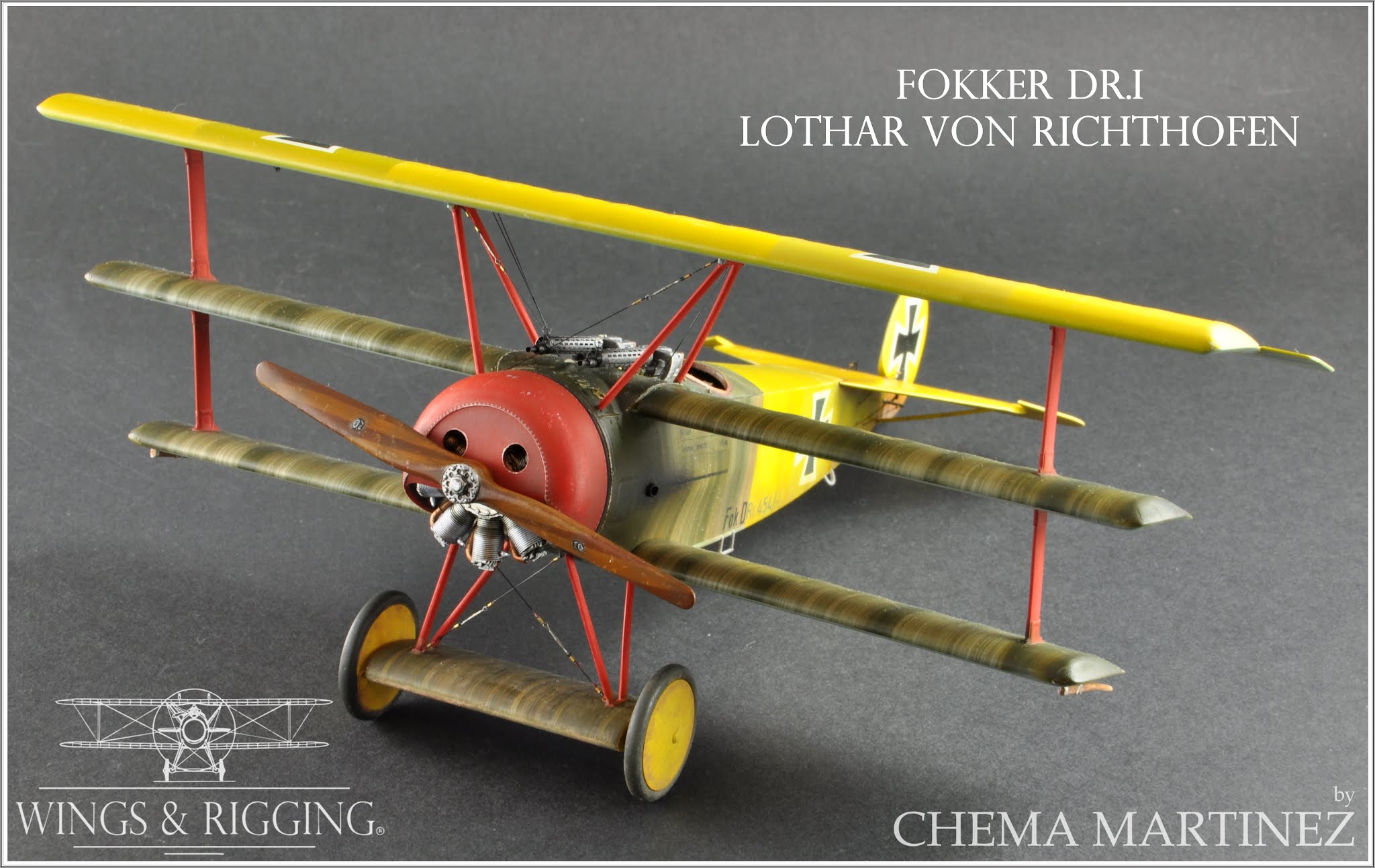
FOKKER Dr.I LOTHAR VON RICHTHOFEN
FOKKER Dr.I LOTHAR VON RICHTHOFEN “A Different Shade of History” A 1/32 scale model built from a kit that’s already more than a decade old. It was great fun to assemble, and I really enjoyed enhancing it both from scratch and with added details in photo-etch, resin, and 3D-printed parts. The painting process was quite a challenge, combining traditional paintwork with decals in some areas of the camouflage. Yellow is not the easiest color to handle, but I’m very pleased with the final result. The crosses were painted using masks, which gives the model a more realistic finish. I chose this particular scheme to step away from the Baron’s typical red and do something different. Even so, his famous red triplane remains on my list of future projects — a small tribute I’d love to create. Hope you like my version of this aircraft. FOKKER Dr.I LOTHAR VON RICHTHOFEN FOKKER Dr.I LOTHAR VON RICHTHOFEN FOKKER Dr.I LOTHAR VON RICHTHOFEN FOKKER Dr.I LOTHAR VON RICHTHOFEN FOKKER Dr.I LOTHAR VON RICHTHOFEN “I chose this particular scheme to step away from the Baron’s typical red and do something different” — Chema M.
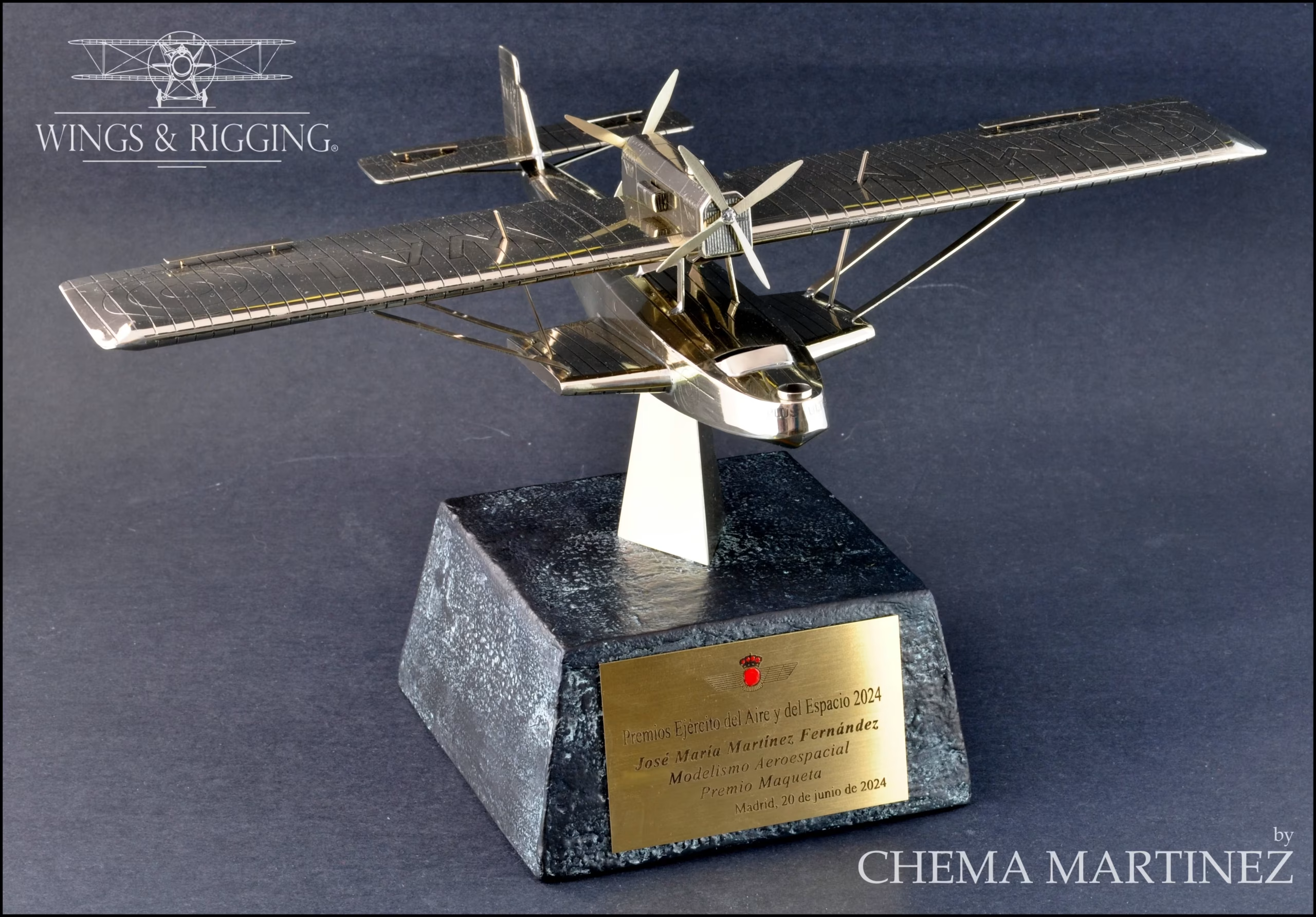
Spanish Air Force Award 2024: the Caudron G.III
CAUDRON G.III “A tribute in scale — honoring the Caudron that trained a generation of Spanish aviators.” A tribute to the 100 officers selected in February 1920 to undergo pilot training on Caudron G.III aircraft at elementary aviation schools such as Cuatro Vientos, Getafe, and Seville. This 1/32 scale plastic kit from Copper State Models has been meticulously refined with the addition of metal turnbuckles from Gaspach Models and an engine adapted using metal rods and copper wiring. The cockpit was scratch‑built and reconfigured into a dual‑control layout to reflect its use in training. Furthermore, the wings were modified to accurately represent the variant that served in the Spanish Air Force. CAUDRON G.III CAUDRON G.III CAUDRON G.III CAUDRON G.III CAUDRON G.III CAUDRON G.III “Each part of this model preserves the memory of those who learned to fly in it.” — Chema M.
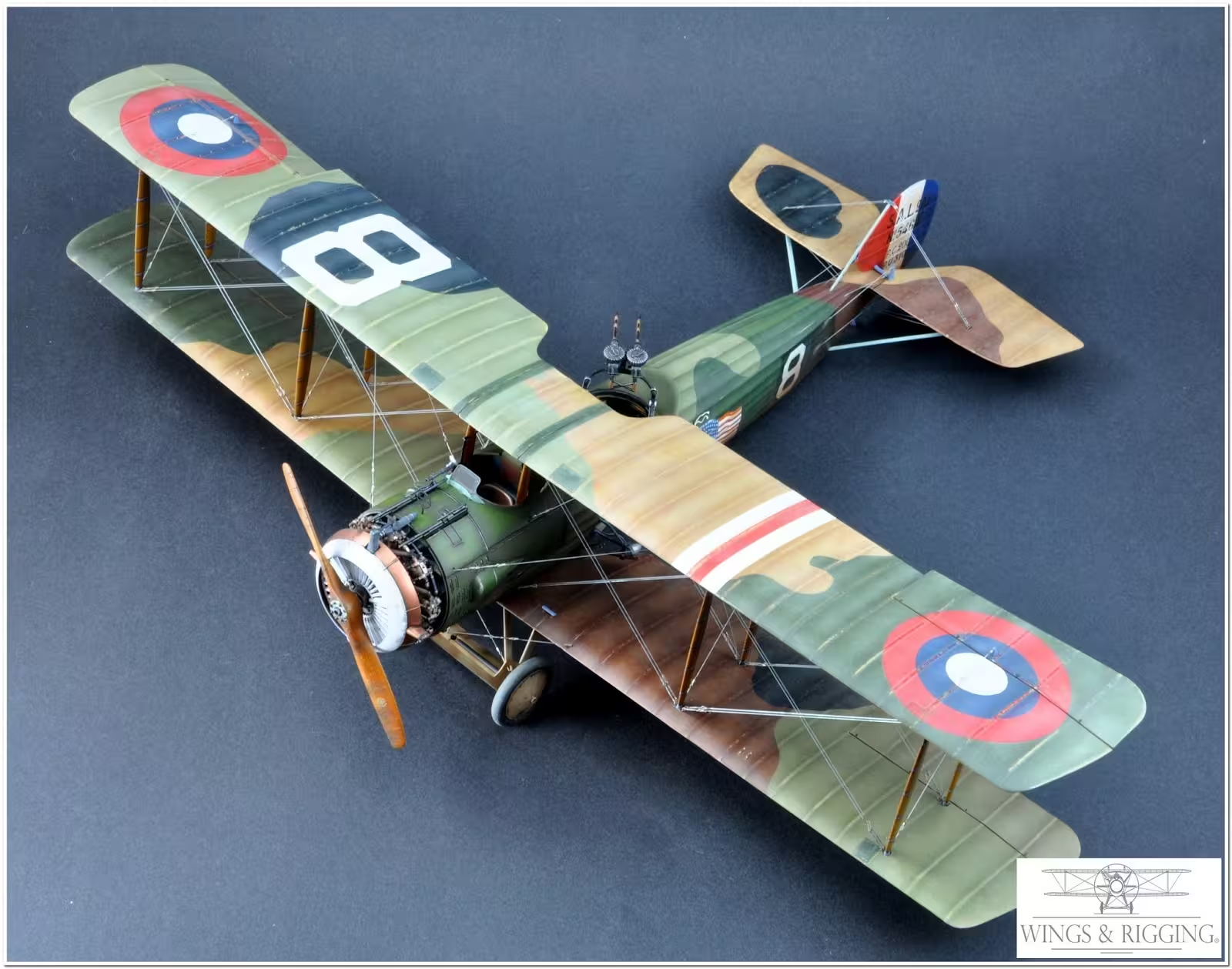
SALMSON 2-A2 USAS
SALMSON-2-A2-USAS “A slow build, a clear direction — the Salmson as a turning point.” This 1/32 scale kit from Wingnut Wings exemplifies the brand’s renowned craftsmanship and attention to detail. I applied subtle enhancements to the engine using fine wiring, and incorporated turnbuckles from Gaspacht Models to refine the rigging. The entire airframe was painted using masking techniques, with the exception of the American flag and rudder markings, which were applied as decals. The build progressed gradually over the span of several years, completed in intermittent sessions. I chose to finalize it as an opportunity to experiment with new painting methods and materials, all in preparation for ongoing projects. I’m highly satisfied with the outcome — it represents a direction I intend to pursue further. I hope you appreciate the final result. SALMSON-2-A2-USAS SALMSON-2-A2-USAS SALMSON-2-A2-USAS SALMSON-2-A2-USAS SALMSON-2-A2-USAS SALMSON-2-A2-USAS “Every session, every pause, every detail: the Salmson taught me patience and direction.” — Chema M.
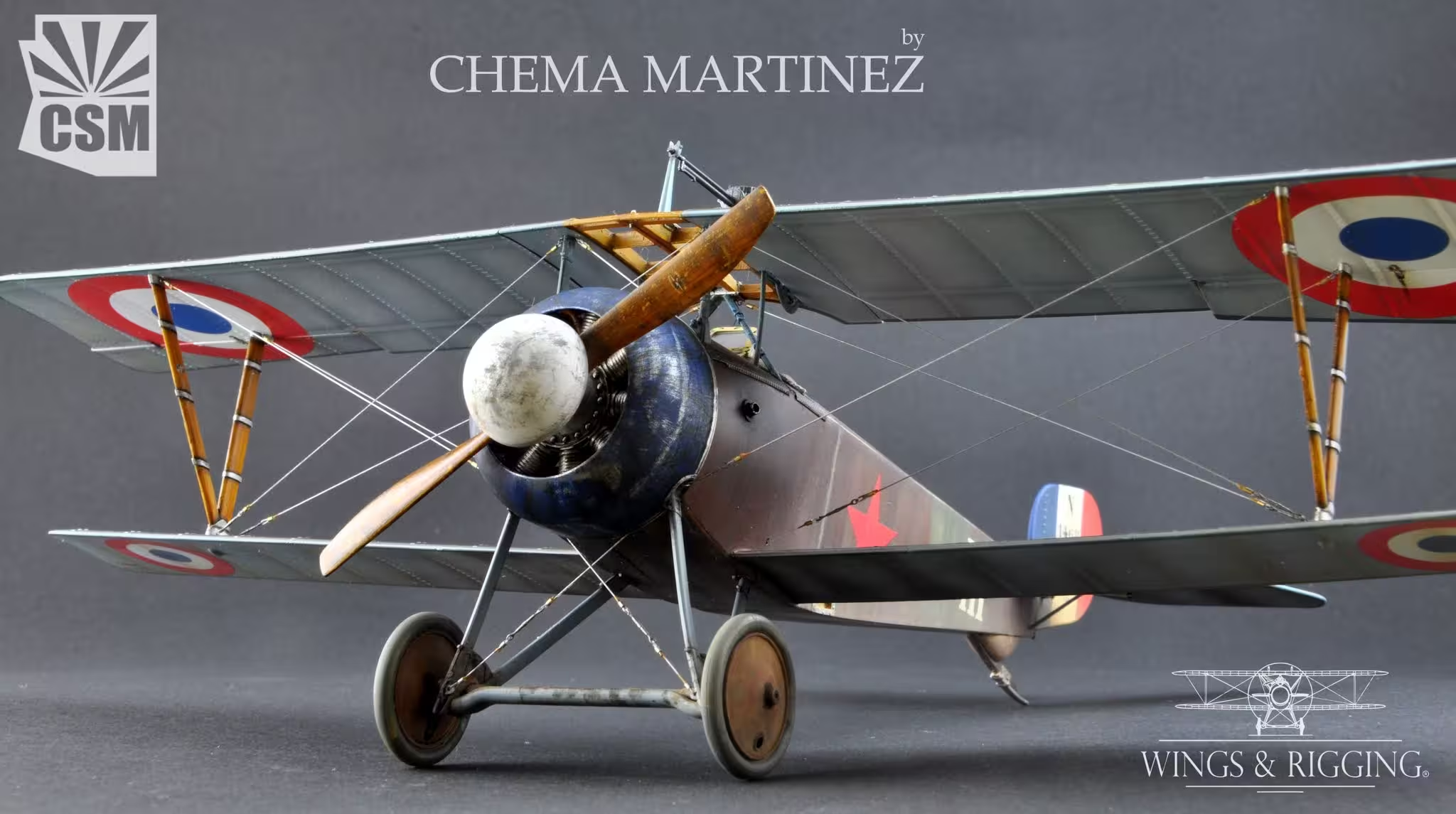
NIEUPORT XVII EARLY
NIEUPORT XVII EARLY “The beginning of a legacy — where precision meets potential.” This 1/32 scale kit from Copper State Models represents the inaugural release in their Nieuport series. The overall quality is exceptional—comparable to the most prestigious brands in the industry. The parts fit together with remarkable precision, and with the addition of a few enhancements, the final result can be truly outstanding. NIEUPORT XVII EARLY NIEUPORT XVII EARLY NIEUPORT XVII EARLY NIEUPORT XVII EARLY NIEUPORT XVII EARLY NIEUPORT XVII EARLY “The beginning of a series that honors the precision, history, and character of the Nieuport.” — Chema M.
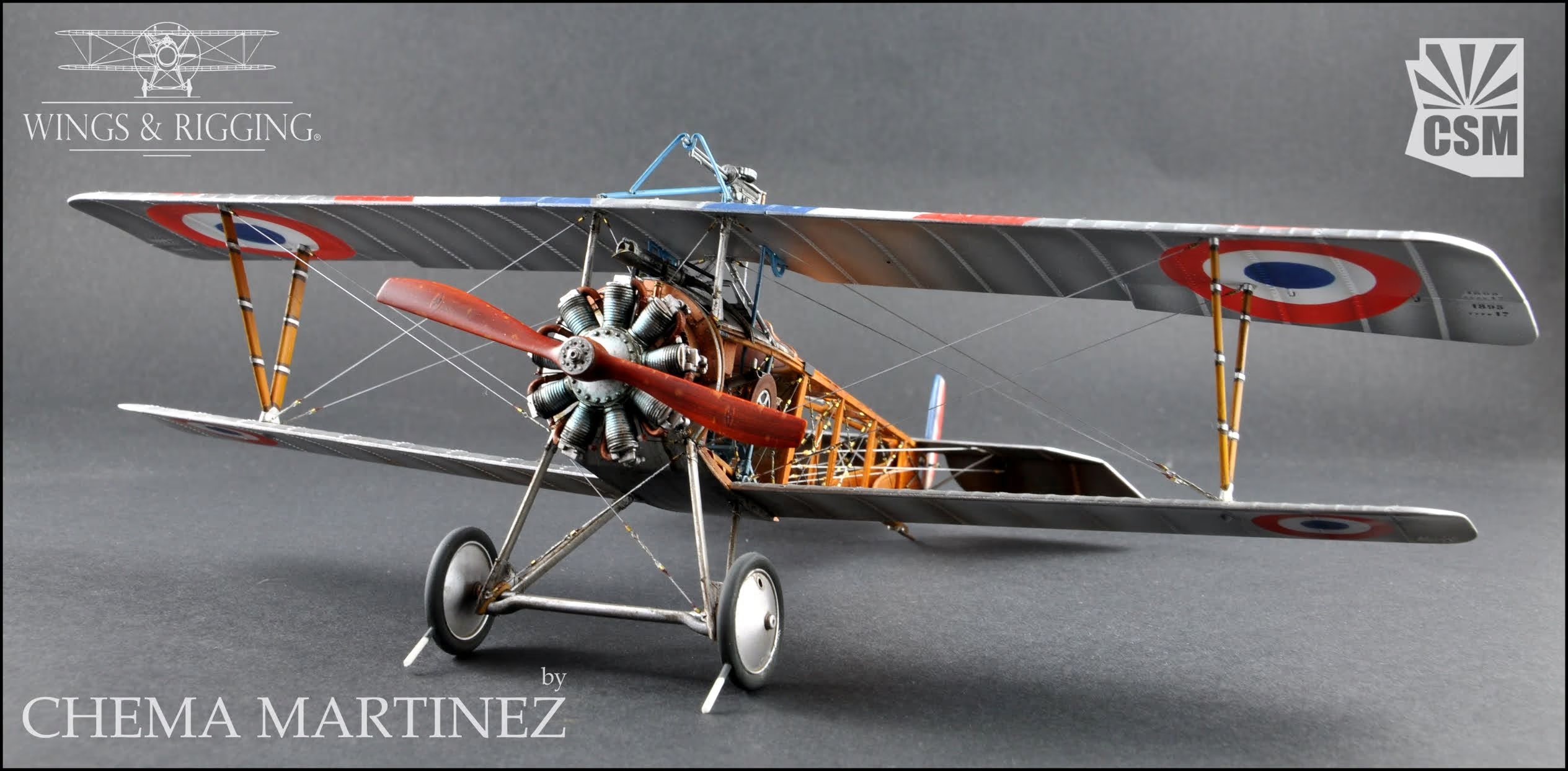
NIEUPORT XVII LATE
NIEUPORT XVII EARLY “The Nieuport does not easily reveal itself — you have to open it to truly understand it.” This marks my second build of the Nieuport model from Copper State Models. For this project, I set out to maximize the potential of the kit’s exceptional molding quality by undertaking an extensive super-detailing process. My focus was to faithfully reconstruct the aircraft’s interior—exposing the fuselage and meticulously crafting each internal component with precision and care. I trust you will appreciate the result. NIEUPORT XVII EARLY NIEUPORT XVII EARLY NIEUPORT XVII EARLY NIEUPORT XVII EARLY NIEUPORT XVII EARLY NIEUPORT XVII EARLY “It’s not just an airplane — it’s a story laid bare in every rib, every shadow, every thread.” — Chema M.
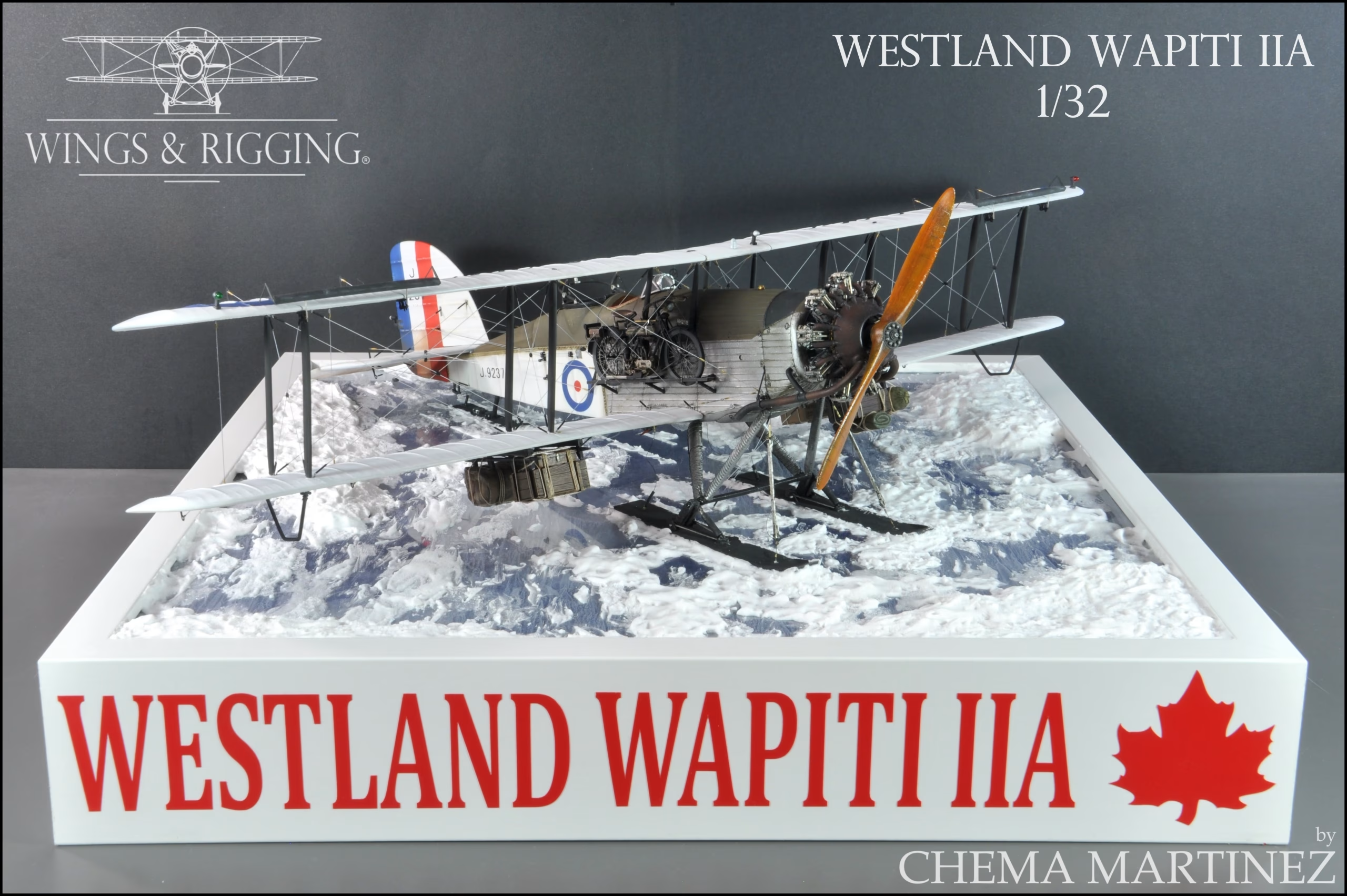
WESTLAND WAPITI IIA
WESTLAND WAPITI IIA “This build explores the operational adaptations of a Royal Canadian Air Force aircraft in extreme environments, reconstructed in 1/32 scale with archival precision.” This 1/32 scale Lukgraph model has been reconfigured to represent a Royal Canadian Air Force aircraft, featuring custom-built skis fabricated from scratch to replace the original landing gear. Logistical equipment was added to the bomb racks, based on archival photographs of the actual aircraft. To enrich the narrative and setting, a 1/32 scale British TR.Model H motorcycle from Copper State Models was incorporated into a frozen lake scene, inspired by imagery published in Kestrel Aerospace Profiles by T.F.J. Leversedge. WESTLAND WAPITI IIA WESTLAND WAPITI IIA WESTLAND WAPITI IIA WESTLAND WAPITI IIA WESTLAND WAPITI IIA WESTLAND WAPITI IIA Every ski, every insignia, every shadow — the Wapiti IIA rebuilt with historical reverence — Chema M.